Category Archives: Life

Solstice, Winter and Summer

Here at the solstice, in the dark of winter, I am dreaming of my garden at the summer solstice.

Here is a snapshot of what was in bloom within a week of the summer solstice.

First up, breadseed poppies and feverfew.

Vertically-framed shot with two burgundy poppies with their faces showing. The focus is on the one center and slightly lower left. It has a yellowish central structure that will become the seedpod, surrounded by creamy-yellow stamens. The burgundy petals are darker near the center, and are gracefully cupped to form a loose goblet shape. The poppies are surrounded by green, and a cluster of daisy-like flowers with white petals and yellow centers. These are feverfew.

Breadseed poppies bloom for a relatively short window — each flower only lasts a couple days — but they can put on an impressive show when they’re in flower!

And in the autumn you get neat seedpods that hold the poppy seeds used in baking.

A bright red poppy with petals with a cut edge and dark purple-black "thumb prints" at the base is in the middle frame. It is bracketed by three burgundy poppies. Pink foxgloves and blue hydrangeas are visible in the background.

I tried a few new flowers this year. All of them were somewhat successful, and I will be growing most of them next spring.

Here, California bluebells and Bird’s-eye gilia join in a beautiful but ephemeral display. 

Both are wildflowers, so they have a short but spectacular bloom in late spring.

This picture shows many small flowers. The larger flowers are an intense medium blue with tiny white stamen dots in the middle. They have five petals that form an open scalloped cup. The smaller flowers also have five petals, but the petals are more distinct from each other. The smaller flowers have a pale lavender base color, but they darken to deep purple at the center, with a yellow central throat. This and the brilliant white stamen dots give a sense of depth to the tiny blooms

This is Schizanthus, with the rather rude common name of poor man’s orchid. It is quite beautiful, and unlike the bluebells and Gilia it continues to bloom all summer.

It also looks good both close up and from a distance, which is not always true.

The copper on the pot is to keep slugs away.

A pot with a copper band holds a tall, vertically growing mass of flowers in shades of pink and purple. Each small flower is symmetrical horizontally but not vertically, giving an impression of little butterflies or orchids. The base color is either pale pink or pale pink-lavender. The pale pink flowers have a strong yellow forehead; the purple-toned ones have a smaller yellow forehead, but strong dark purple markings above.

Signet marigolds are one of my favorite annuals.

I grow them in big pots, three plants to a pot. They don’t photograph especially well, but they bring lots of life and color. Close up, the reds are my favorites, but the orange and yellow form a tapestry with the other flowers.

A series of staggered pots of flowers and plants, with a gate and fence made of field posts in the background. The foremost pot is full of bright marigolds with lots of tiny flowers in shades or medium orange and burgundy. The next layers is pots of green, mint and a snapdragon not yet blooming. Beyond are more marigolds, lemon yellow this time. In the background there are more layers of marigolds and greenery.

In gardening, everyone draws the line between weeds and flowers in a different spot.

For me, mullein is definitely on the “flower” side. This one is just getting started. They become a handsome 3-5 foot spike, and the birds love the seeds!

Feverfew and foxglove behind.

A spike of flowers is just getting started. It is growing from a floret of gray-green fuzzy leaves, most of which are below the image. The opening flowers are lemon yellow, and above them is a compact spike that hints at dozens of flowers to come. Behind is a bank of white and yellow flowers -- feverfew -- and a few pink spikes off to the right -- foxglove.

Some flowers photograph beautifully.

For others, a photo just does not capture their charm.

Here, gentian sage rises in front of agastache, with signet marigolds in the background.

Sages and agastaches in general are charming — especially in person!

Blue flowers with almost an alligator mouth look (long forehead, long lower jaw) rise off of a stalk on the left. Behind are slim stalks carrying clusters of apricot-marmalade trumpet-shaped flowers. Beyond is a cluster of lemon yellow marigolds

And Chantilly snapdragons!

I grew these from seed last spring, but unlike the others they are not true annuals. They often overwinter in our climate, and I have also discovered you can take cuttings! I have a bunch of babies in the basement.

Several flowers of varying color are stacked up a single closer spike. Each flower has five petals, but is vertically oriented, so it has two petals as a forehead and three as the lower face. The bottom-most flowers are bright yellow-orange. The topmost are a soft orange-pink.

Thank you for coming on this tour of my summer solstice garden!

A bank of poppies with gray-green foliage and deep burgundy flowers. On the left is a stand of flowers with fine-cut yellow-green foliage and lots of little white and yellow daisy-like flowers. This is feverfew. A couple spikes of pink foxglove show at the right and in the background.

I will be growing all of these again… and I may have ordered a dozen or two packets of seed to try in addition.

Happy solstice, and know the light will be longer tomorrow! 
Spring is Springing!

Spring is off to a bounding and early start here.

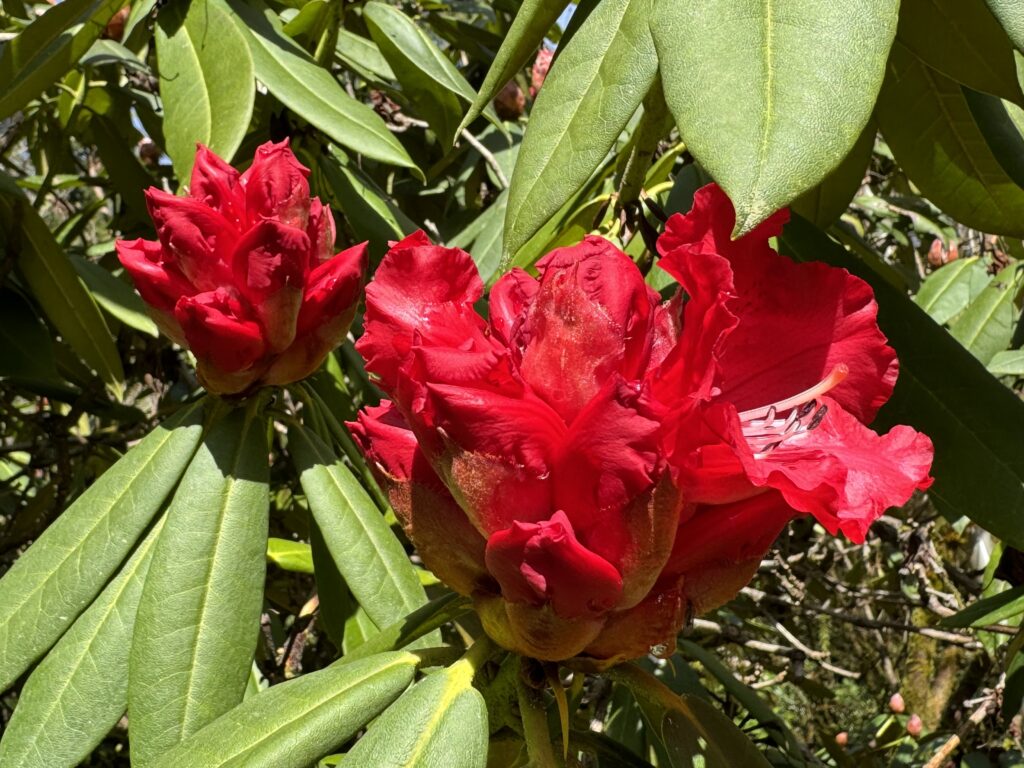
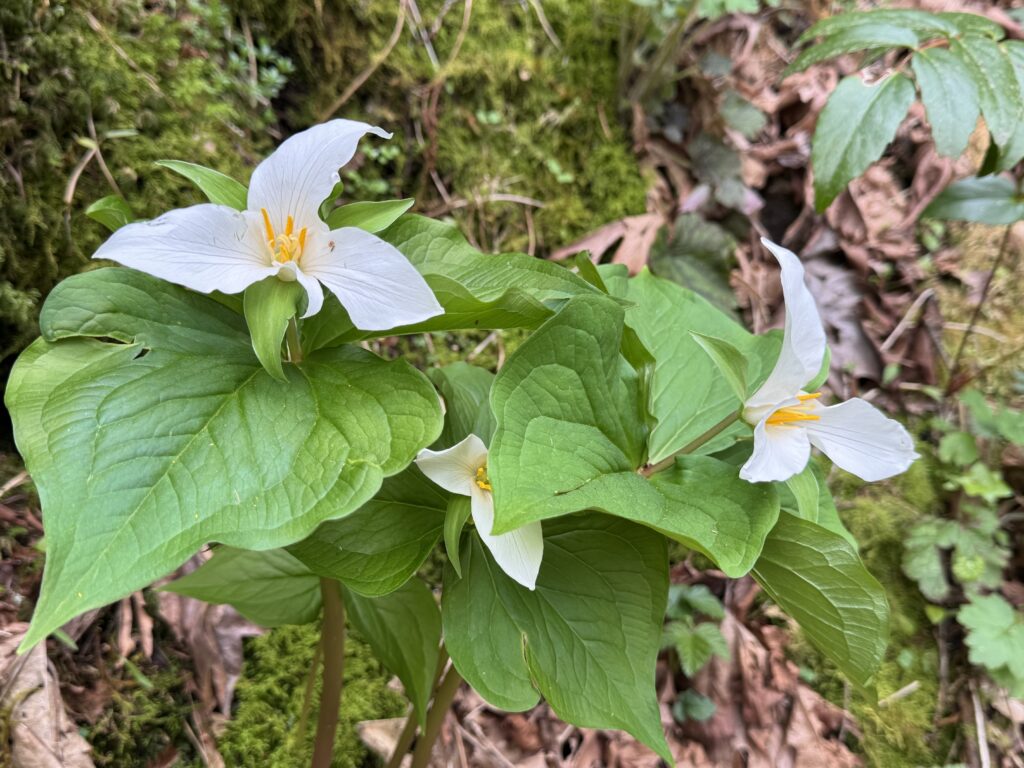
Pacific Trillium. These native beauties were photographed at Cougar Mountain park in Renton 3/30

Based on my photo rolls, everything is running 1-3 weeks earlier than usual.

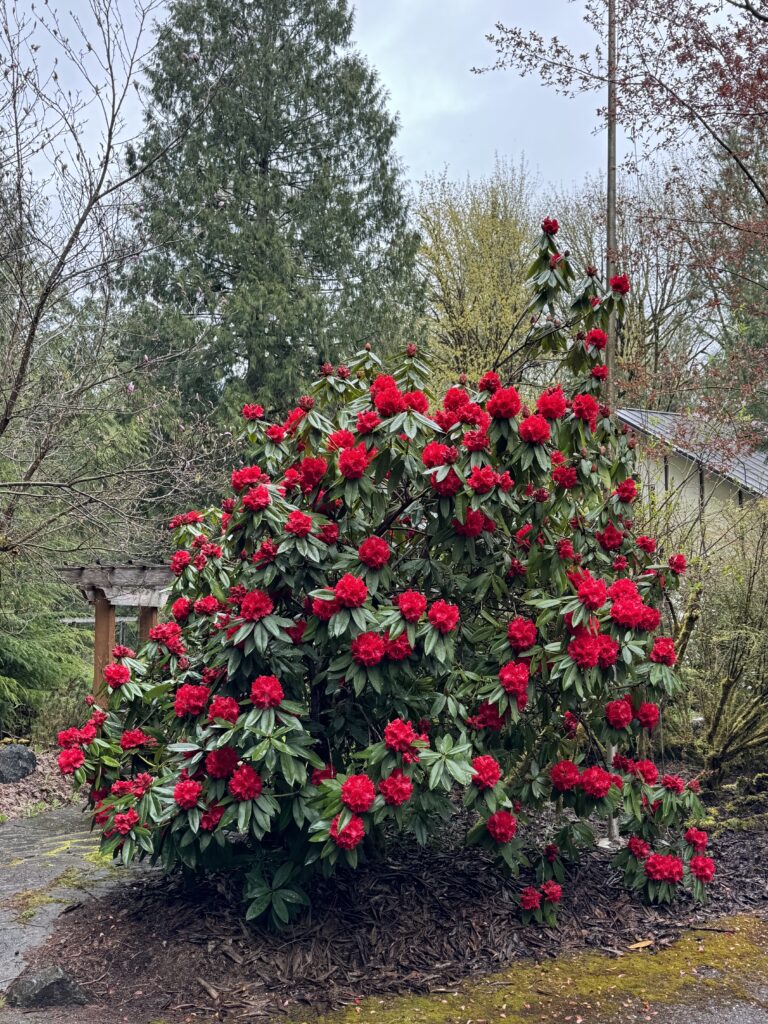
Earliest red rhodie at our home. Taken 3/30.

Our early big red started opening a week ago, and is now in full bloom.

Big red, 4/6/24

Last year, it was at a comparable bloom point 4/22.

I admit I’m enjoying the warmer weather, even as I worry about this summer.

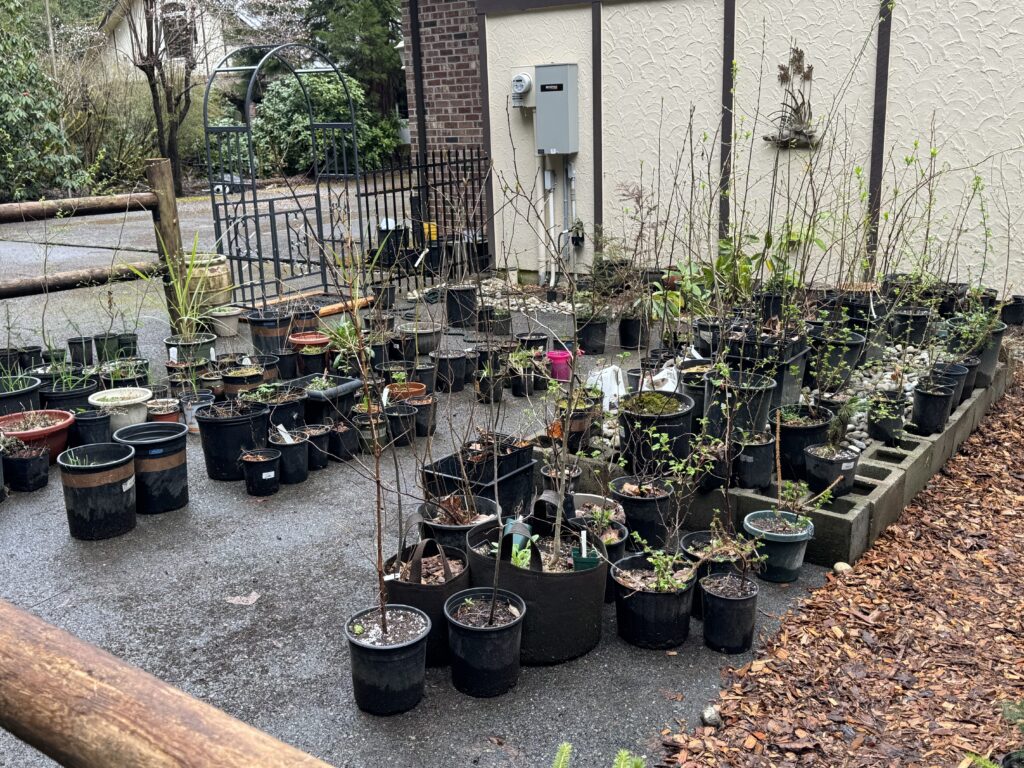
Rob helped me set up a new nursery area in some excess driveway space. I’ve been busily up-potting a lot of the native trees and shrubs that we’re growing on.

A lot of them will go in the ground this fall.

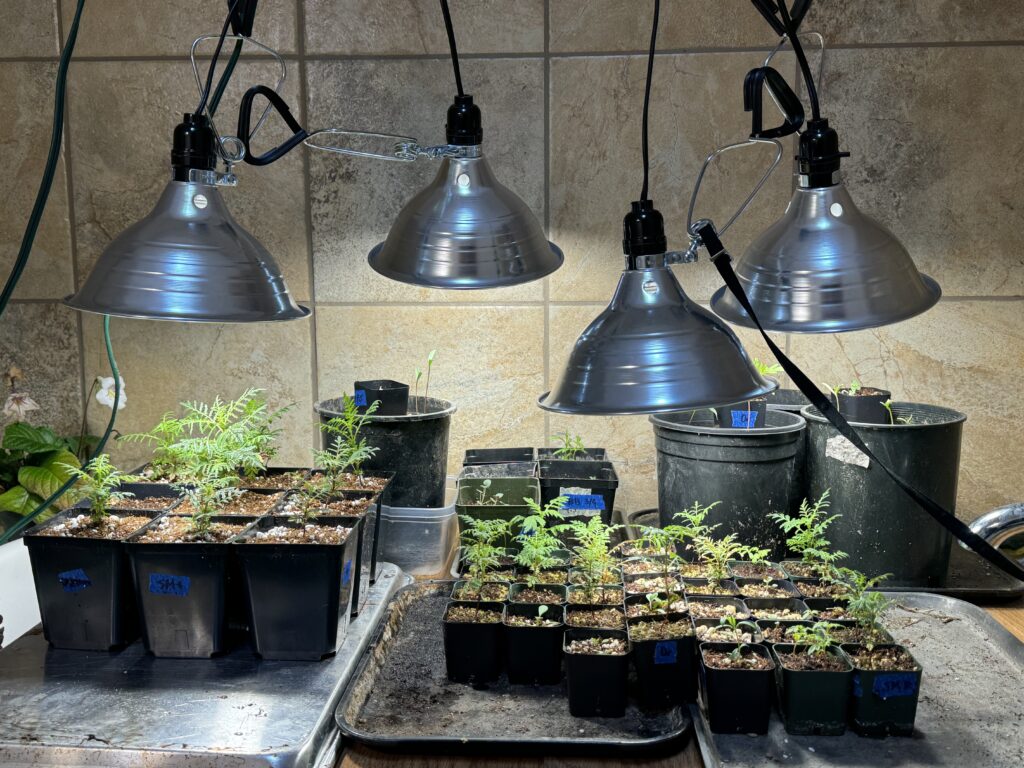
I have a lot of native seeds in the “wait and see” stage. They require both stratification and patience!

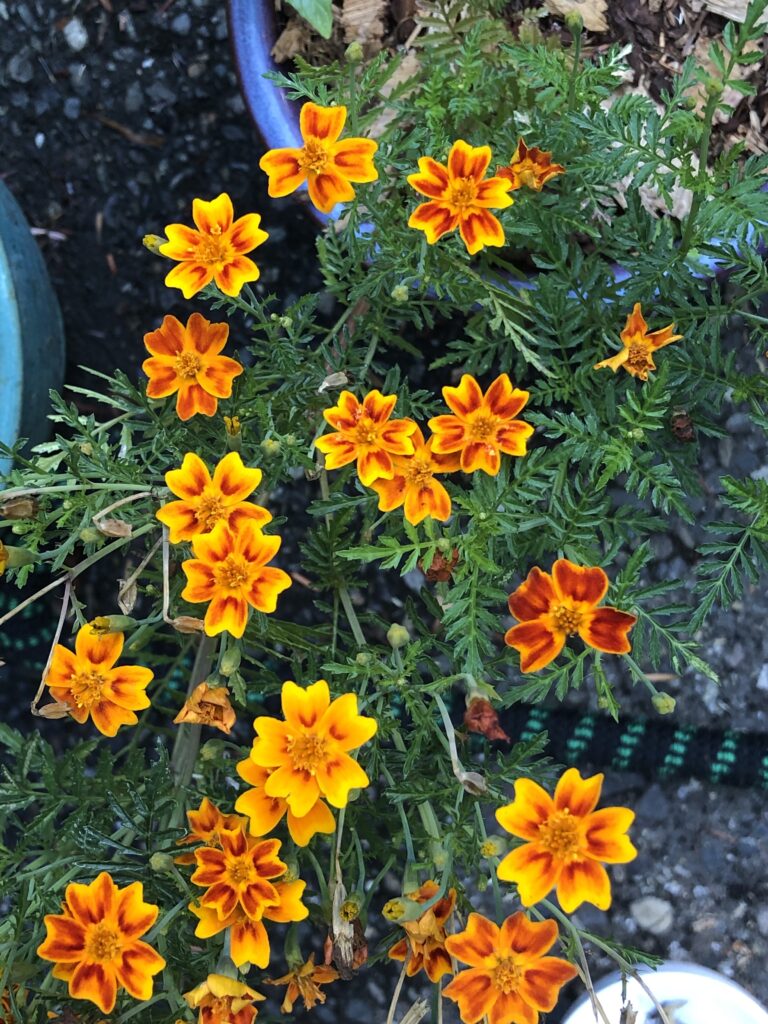
Fortunately, I also have garden friendlies like signet marigolds to give me instant gratification in the meantime 🙂

I grew them for the first time last year, and thought them utterly adorable, so I’m doubling down this year!

I’m growing seeds from this beauty, some compact orange signet marigolds, and some burgundy signet marigolds. I have no idea how true they’ll come from seed, but only one way to find out!

Happy Equinox!

It felt like mid-spring today, and has been feeling like spring for about a week now.

It was a long time coming, though! After a very mild December and January, February came down like Thor’s hammer.

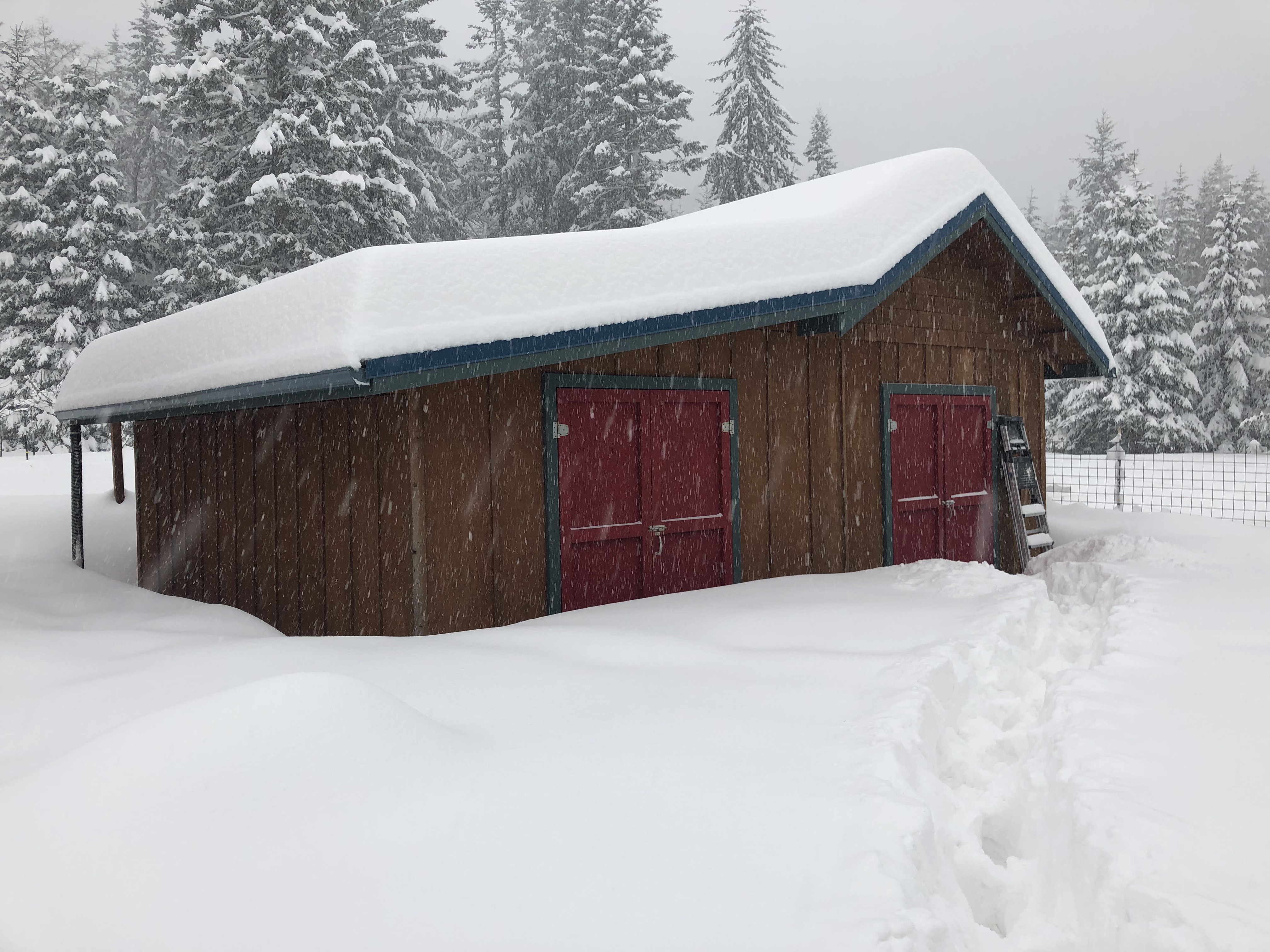
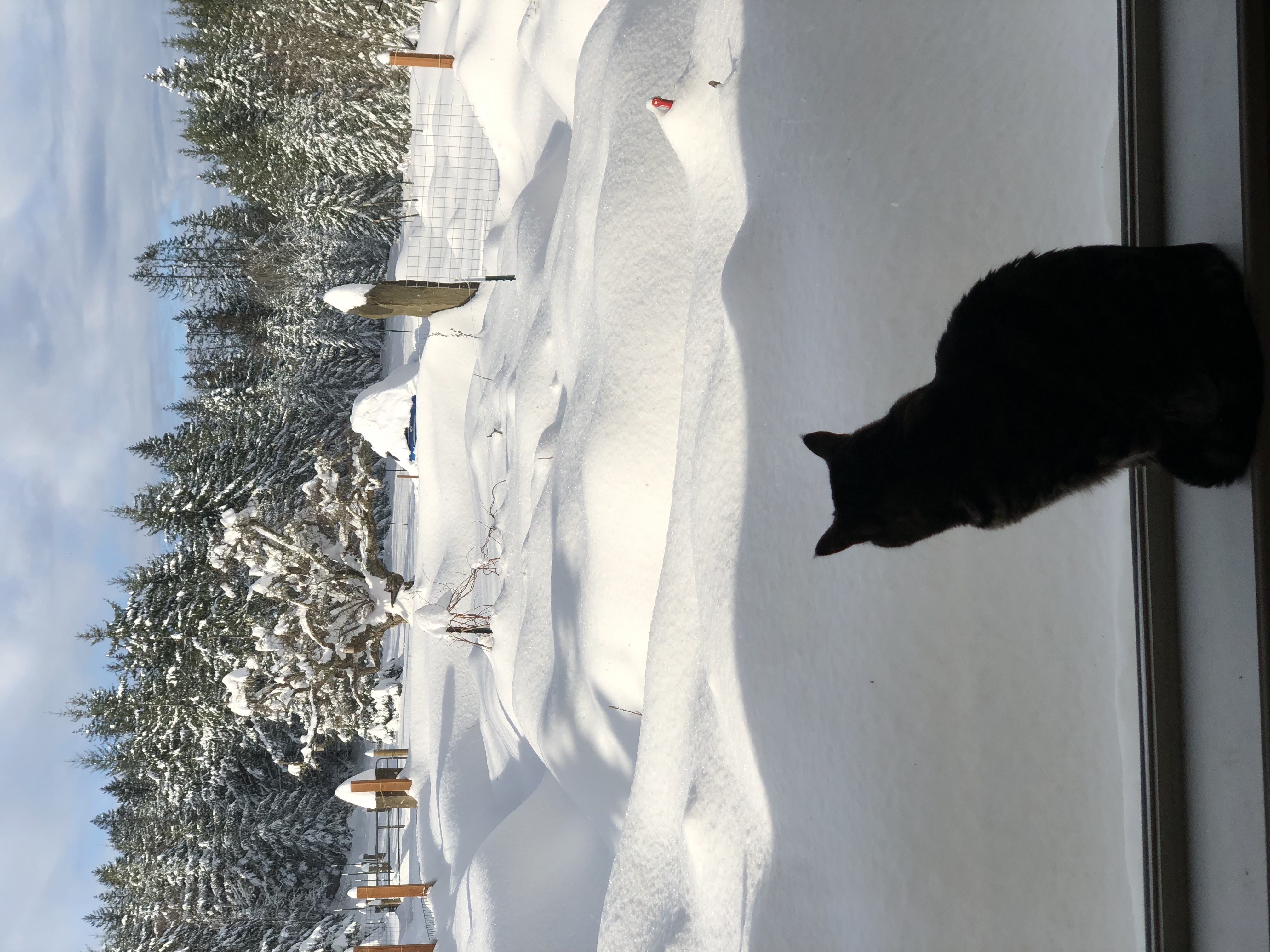
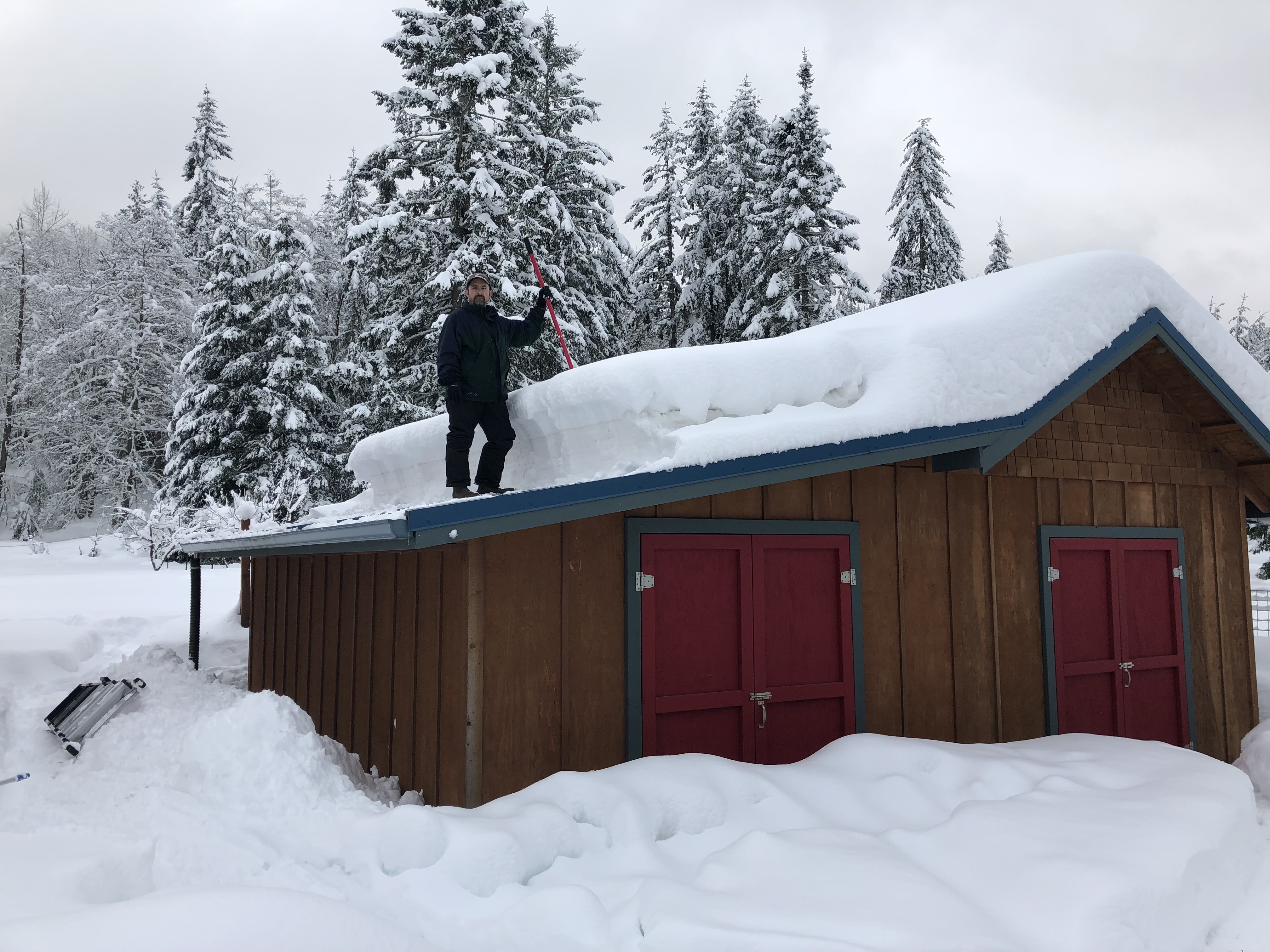
We got almost three feet of snow over about four days.

The kitties were not amused.

Nor were the goats.

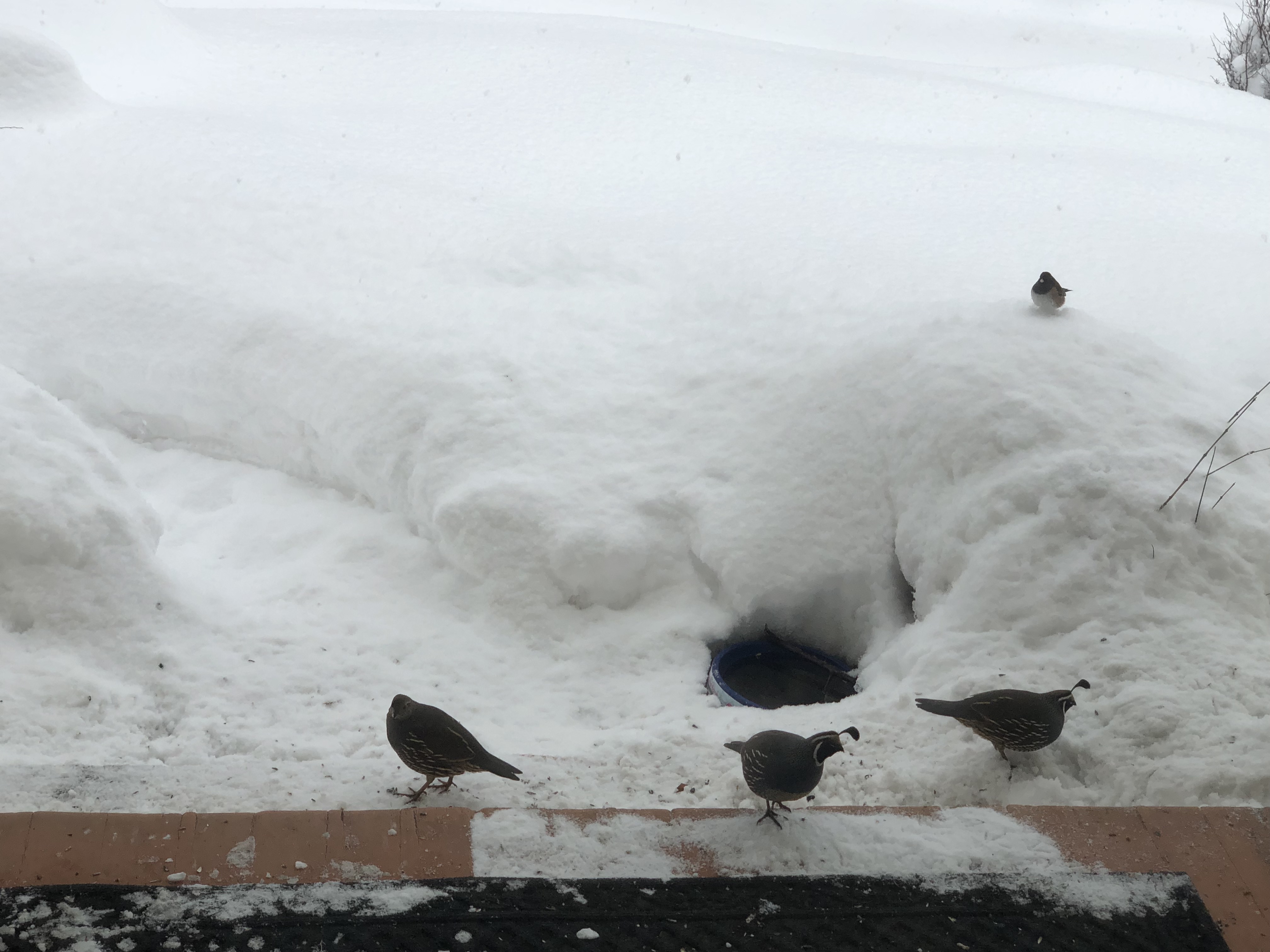
Nor were the wild birds. I had to spread seed on the porch, because the snow was so deep and soft. We even got a family of quail coming by!

Nor was the Rob. He was quite worried about the roofs, and whether our smaller structures would be able to hold the weight.

Even once the snow was off the roofs, the snow barely melted until last week — it just compressed, and compressed, and compressed, but with a freeze every night it was excruciatingly slow.

About a week ago the temperatures bobbed above freezing and stayed there.

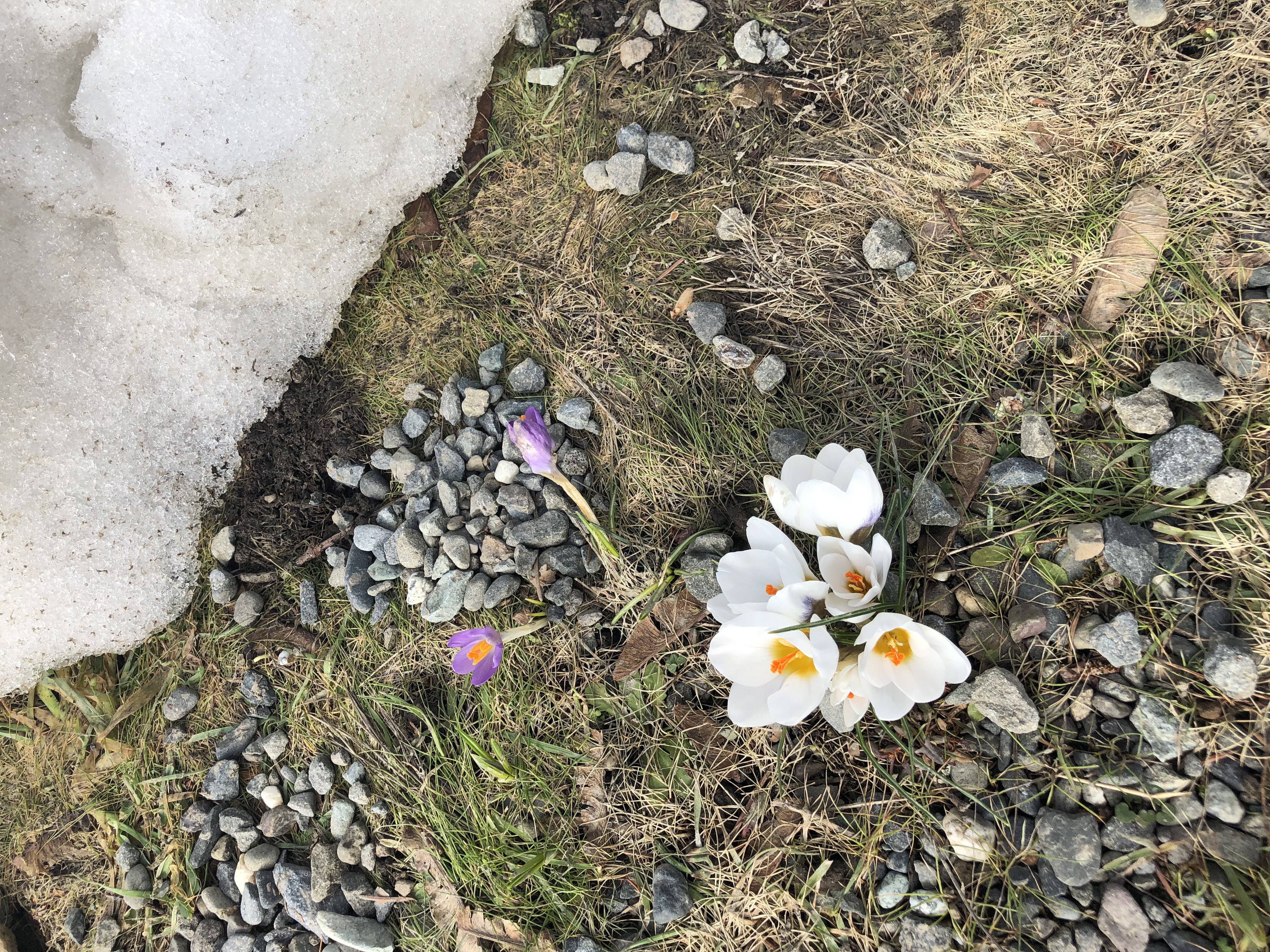
And finally, finally, the snow receded.

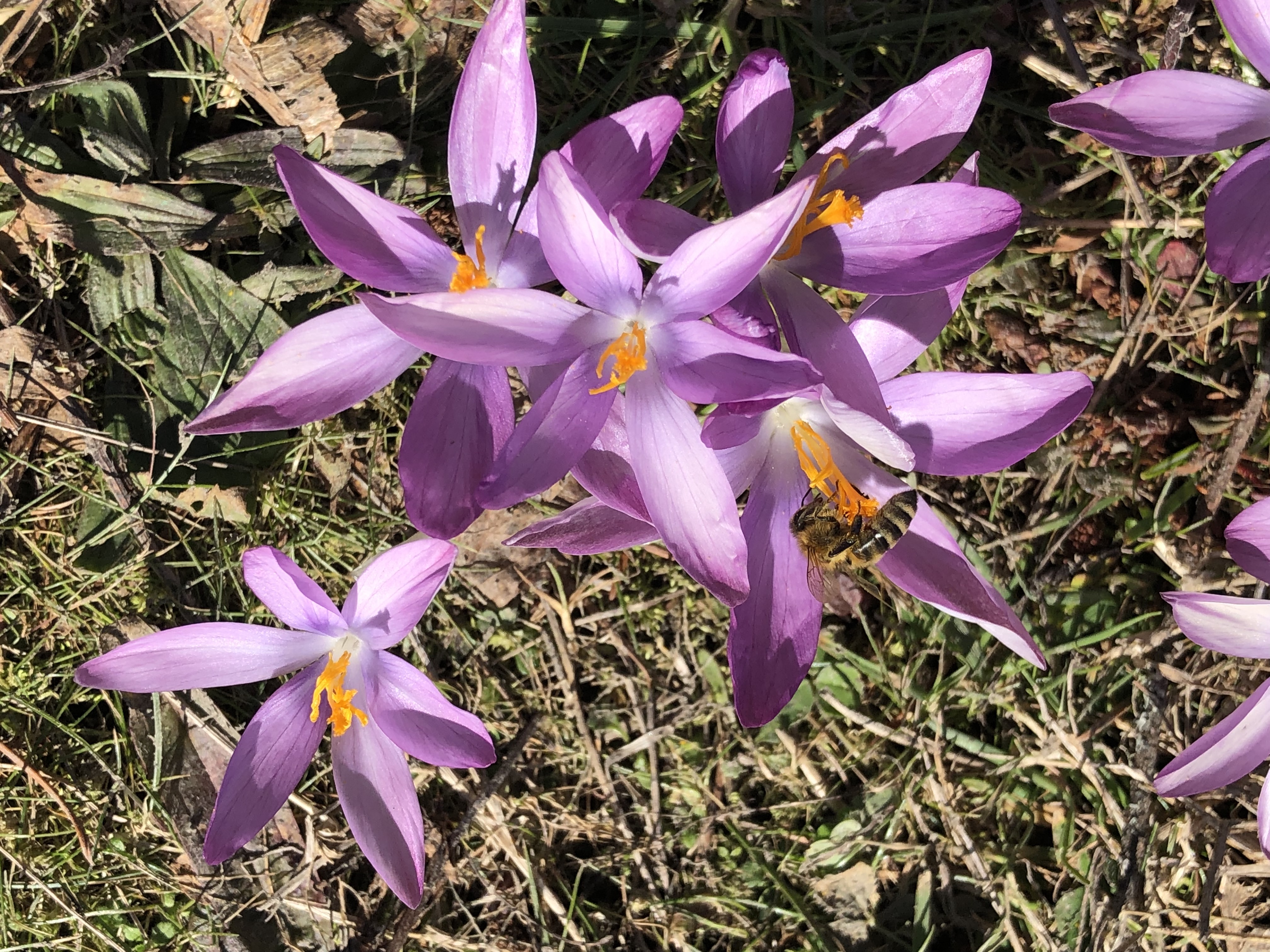
There is still snow, especially in the shade, but the crocuses are in full bloom, and the bees are out enjoying them!

Happy spring!

Writing Goals for 2019

I have three goals for 2019:

  • Query my mage thief novel. I think it just needs one more revision. And, apparently, a name.
  • Write twelve short stories. This hasn’t historically been my forte, but I have had a nest of flash fiction ideas in the last few days, so I think one a month should be doable.
  • Write a new book! This will probably be my Dream Guild book, but it might wind up being my Mountain Life book instead. Time will tell!

I expect the non-writing front to be much like last year, although I’m hoping to get a better handle on the garden.

Wish me luck!

Recovering from the Holidays

I very much enjoy the holidays, but the time between Thanksgiving and New Years is always breathless, with too much to do and to much to-ing and fro-ing.

I made a bunch of toffee and chocolate clusters for friends and family. I went to Tacoma and Seattle three times in a week. I was supposed to catch up on work while all of my clients were out of the office. I made headway, but catch up? Not so much.

So now we have made it through the holidays, and I am happy to have things getting back to normal.

We’ll have the Christmas tree up for another couple weeks — which means, as far as I’m concerned, we still have the light and beauty of the holidays without the stress.

Living Dangerously

Last night Rob and I went to Free Solo, a documentary about a climber who climbed El Cap without a rope.

It is fascinating, because it shows a very different perspective on risk and fear and death. It’s the sort of perspective that it’s interesting to collect.

I was a gym rat climber for several years, enough that I know climbing technique and can appreciate the skill — and difficulty — involved in something like this. But as a gym rat climber, I dismissed free solo climbers as being nuts. It seemed so needless.

Having gotten a glimpse into this guy’s world, I will revise my opinion: they may not be nuts, but they have a very different way of assessing risk and whether it’s worth it.

It isn’t that this guy doesn’t see the risk. He does. But for him it is a small risk (ha!) with a very high consequence. And to be fair, he does work to make that risk as small as he can, but that doesn’t take the high consequence away.

One of his friends likened it to someone going for Olympic gold, where you would either get gold or you would die. That seemed apt.

Most people would not take that challenge, but it is fascinating to see someone who will accept the challenge, and recognize that he has a lot in common with adventurers and explorers through the ages.

The part that was hard for me wasn’t actually that he was risking his life, but that he was risking the life that others hold dear. I felt bad for his girlfriend (yes, she knew he was into this, but still!), and even the film crew — who were also his friends, and were all too conscious of the possible outcomes.

Watching their fear made it seem real in a way that his own outlook did not.

So, an interesting study on risk, mastery, and how to reflect difficulty in a specialized domain.


Fimbulwinter

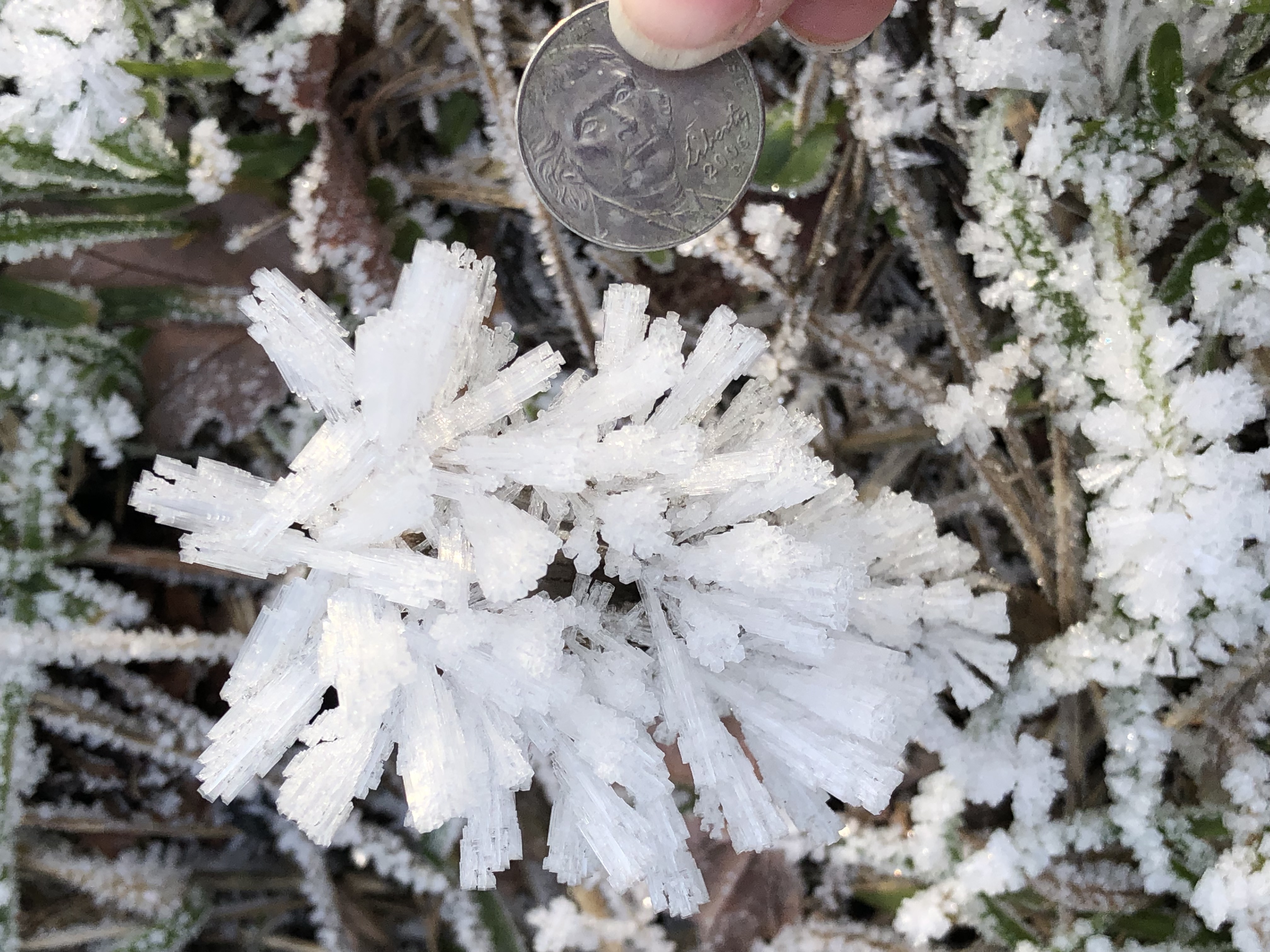
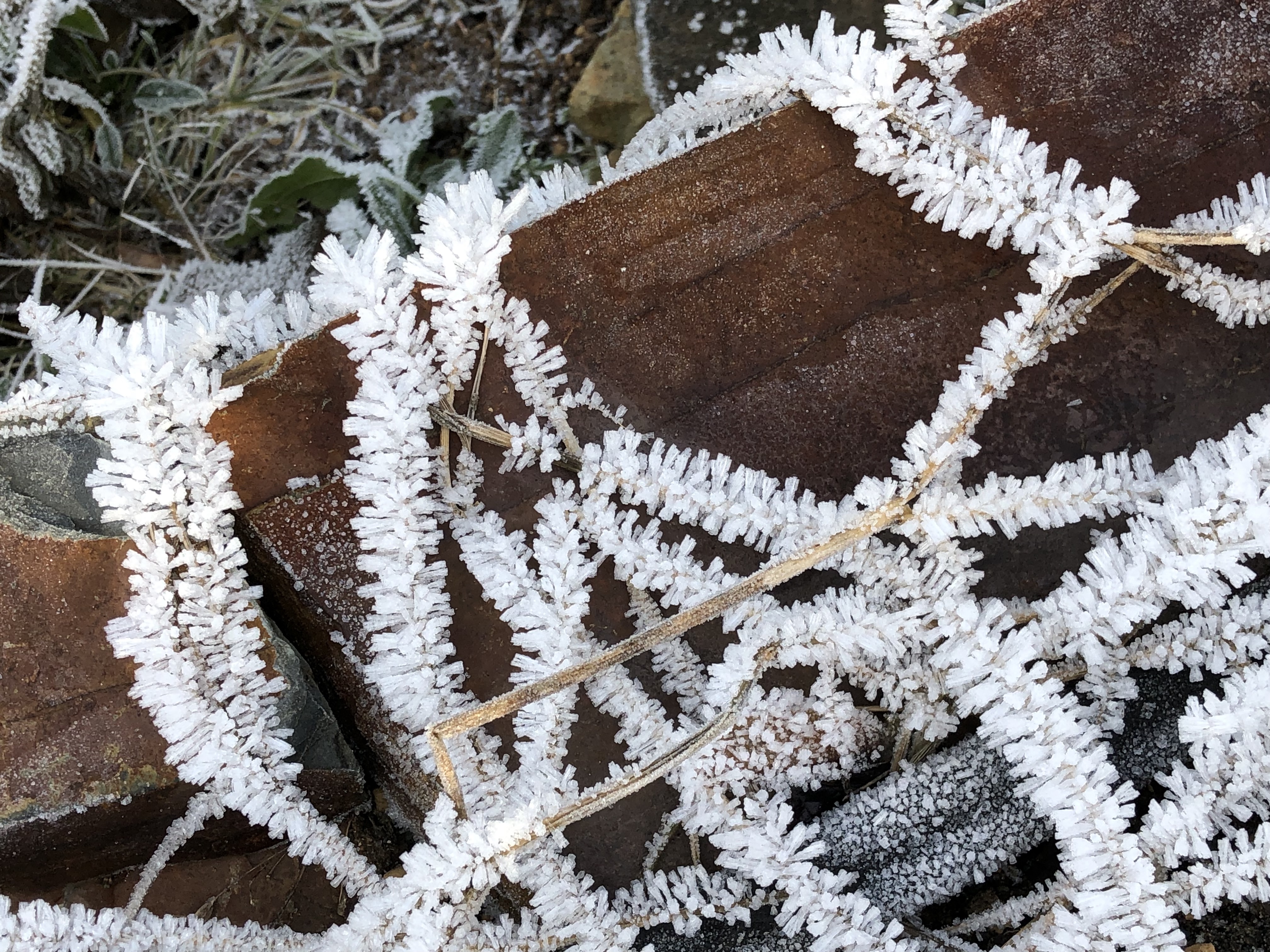
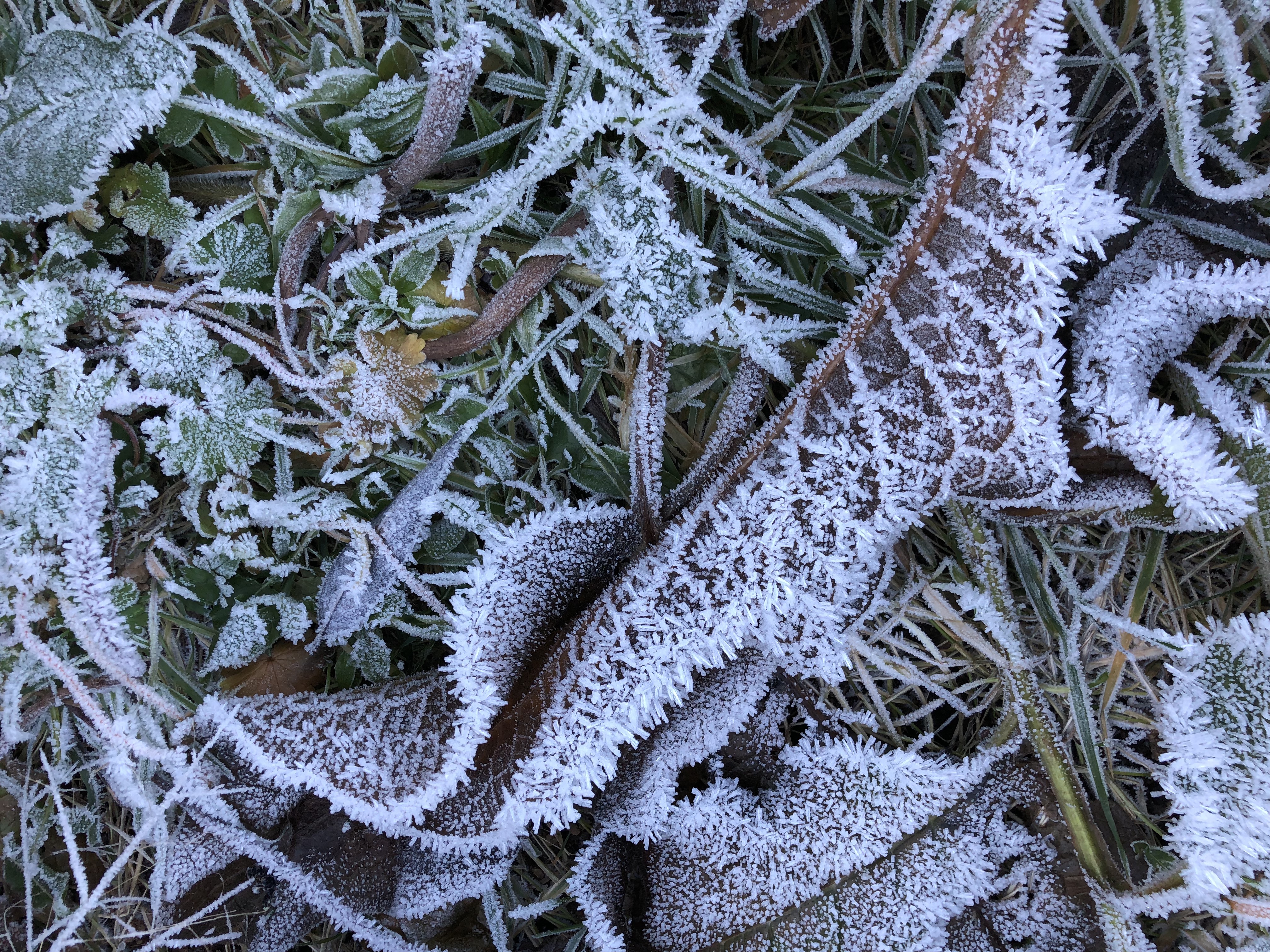
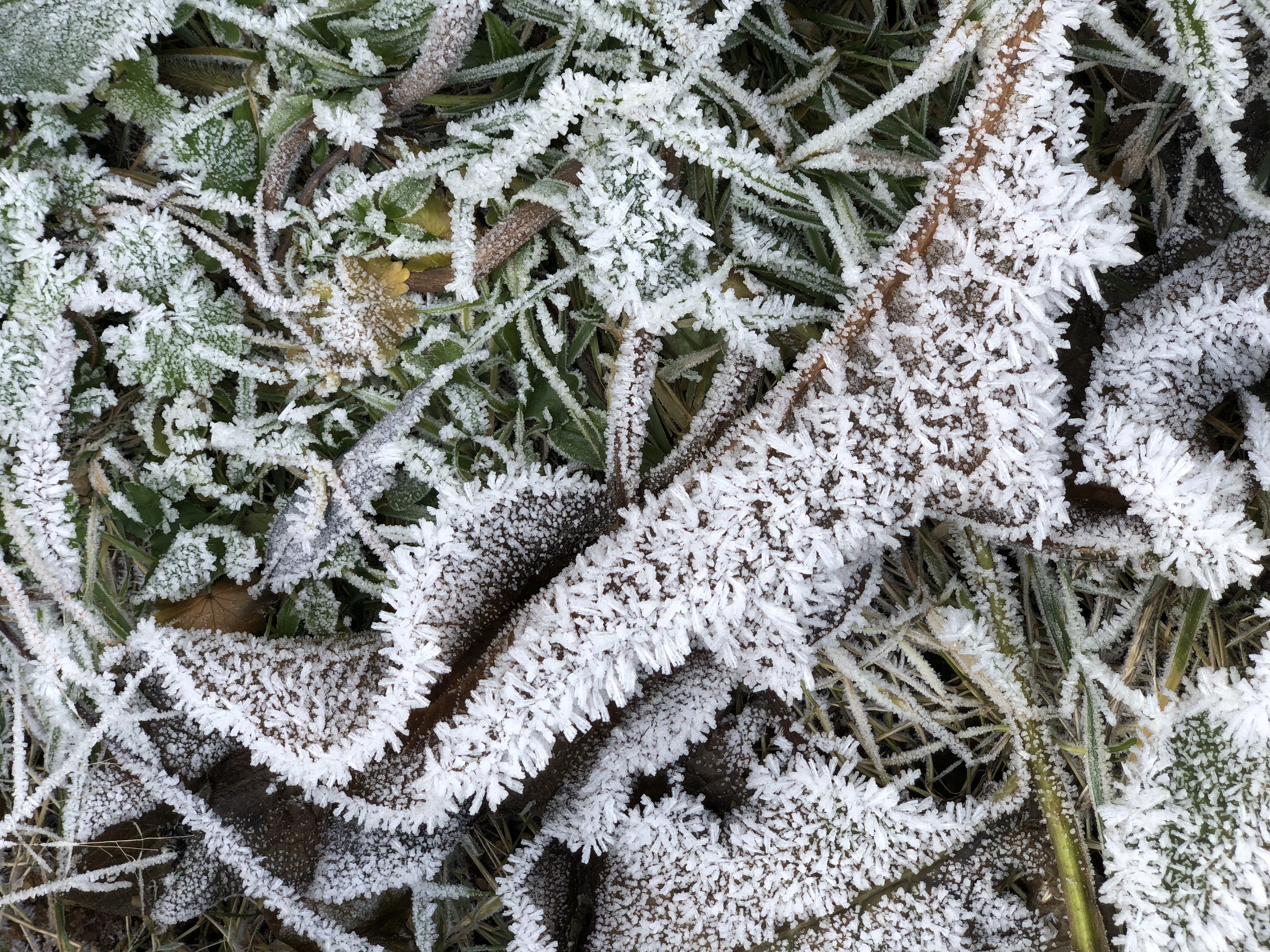
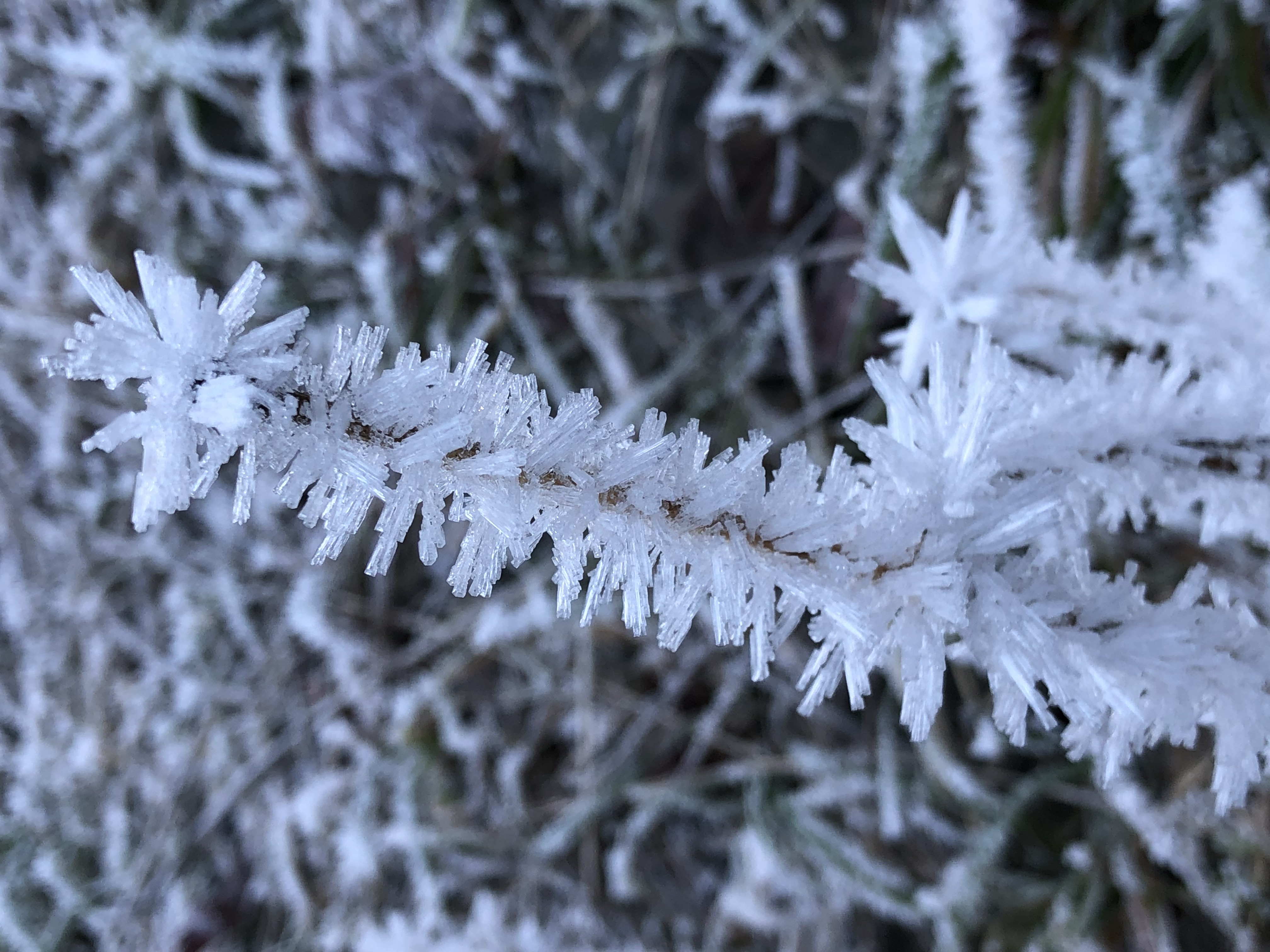
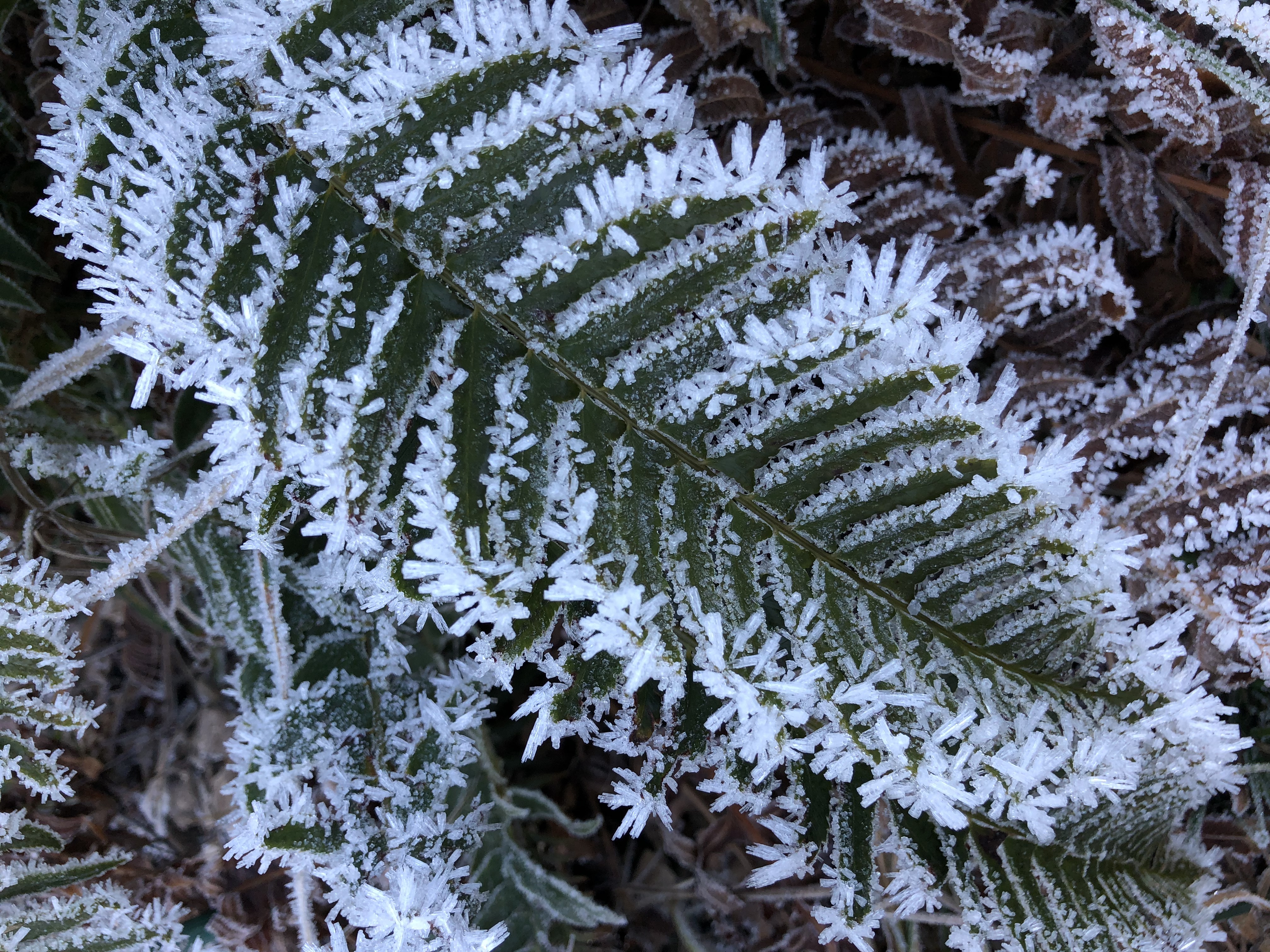
A fourth hard freeze in a row, without an intervening thaw, has our landscape covered by delicate ice crystals. Each day they get a little bigger.

Today, for the first time, I felt that a sense of scale was needed.

This is not false scale. The ice crystals really are that big — although admittedly these were some of the largest in the landscape.

They grow very differently on different surfaces, which makes for some neat contrasts.

It is also fun to observe day-to-day changes.

Here is the day three comfrey frost versus the day four comfrey frost.

Comfrey frost, day 3

Comfrey frost, day 4

In principle they are the same, but all the ice crystals are just a little bigger, a little more compounded.

I am enjoying the frost, but I’m also looking forward to the thaw we’re expecting tomorrow afternoon. The layer of ice and the cold are hard on the wildlife.

I put the hummingbird feeder back out on day 2, and two hummingbirds are still around. I had to thaw the feeder out mid-morning today, which gives some sense of just how frigid it is, given that hummer water is usually good down to 27-28F.

Soon it will be back to rain.


Compounding Frost

We have had three days of heavy frost, without an intervening full thaw.

The frost-on-frost makes the lawn look like we’ve had a light snow.

However, instead of snow, the white is caused by millions of tiny ice crystals grown directly on the plant material. Crystals 1/4 inch long are common. Certain grasses seem to be especially good seed material for the ice crystals.

Plants that are aren’t quite as good a foundation material make for more interesting structures, since the frost can grow well on part but not all.

I especially like how the frost looks on the sword ferns.

The patterning is also more visible in slightly more sheltered areas. This dead comfrey leaf shows the wonderful variability of frost growth.

We’re expecting one more frosty morning tomorrow. With each subsequent night the frost gets bigger, but some of the definition is lost. Pretty soon we’ll be lost under a forest of ice crystals!

Heavy Frost

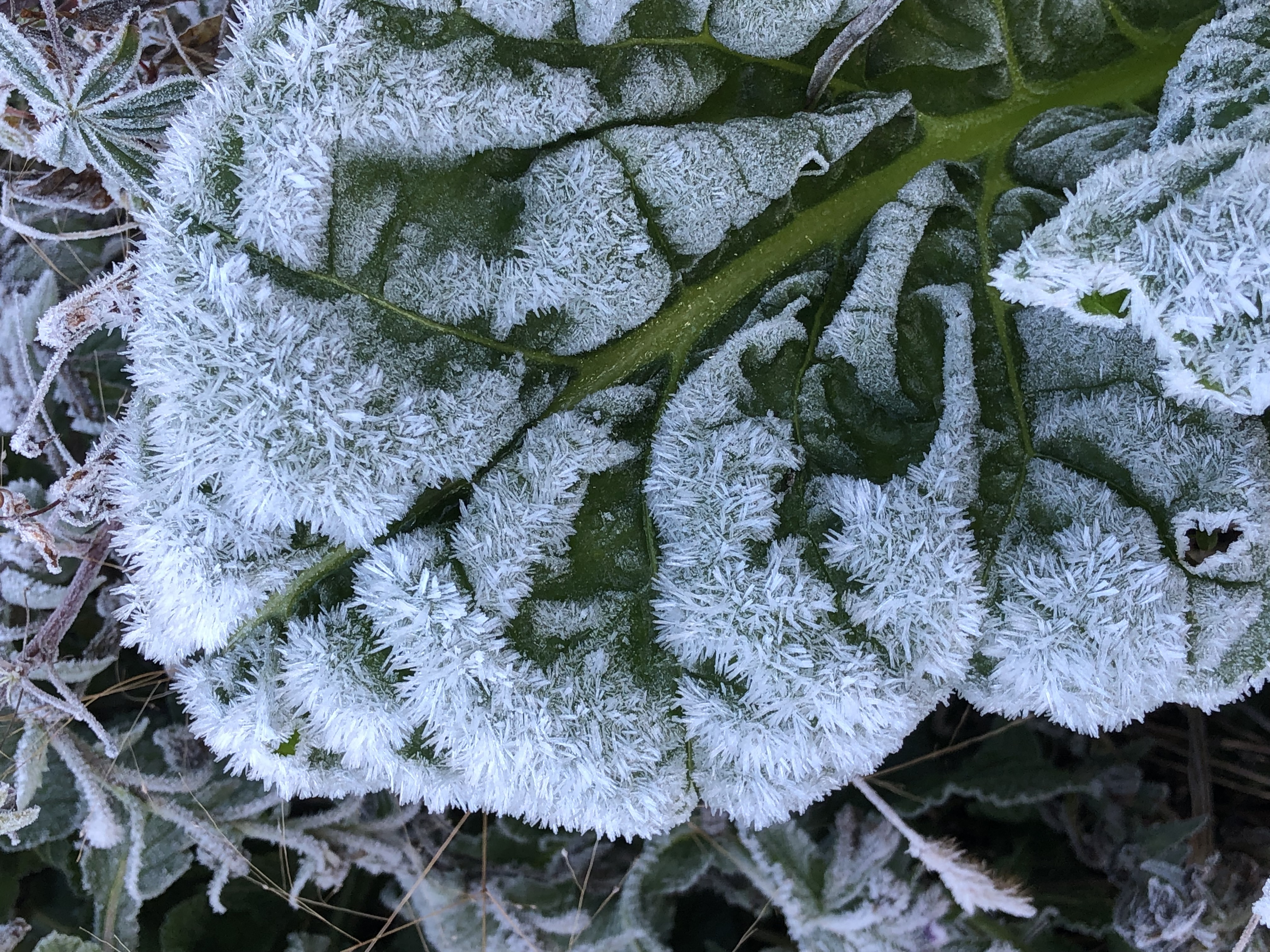
We had a very mild autumn, but last time we got our first truly hard frost. It went down to 27F last night, and the humidity was high enough for some fairly spectacular frost this morning.

Frosty lupin
Frosty lupin

Frosty chard
Frosty chard

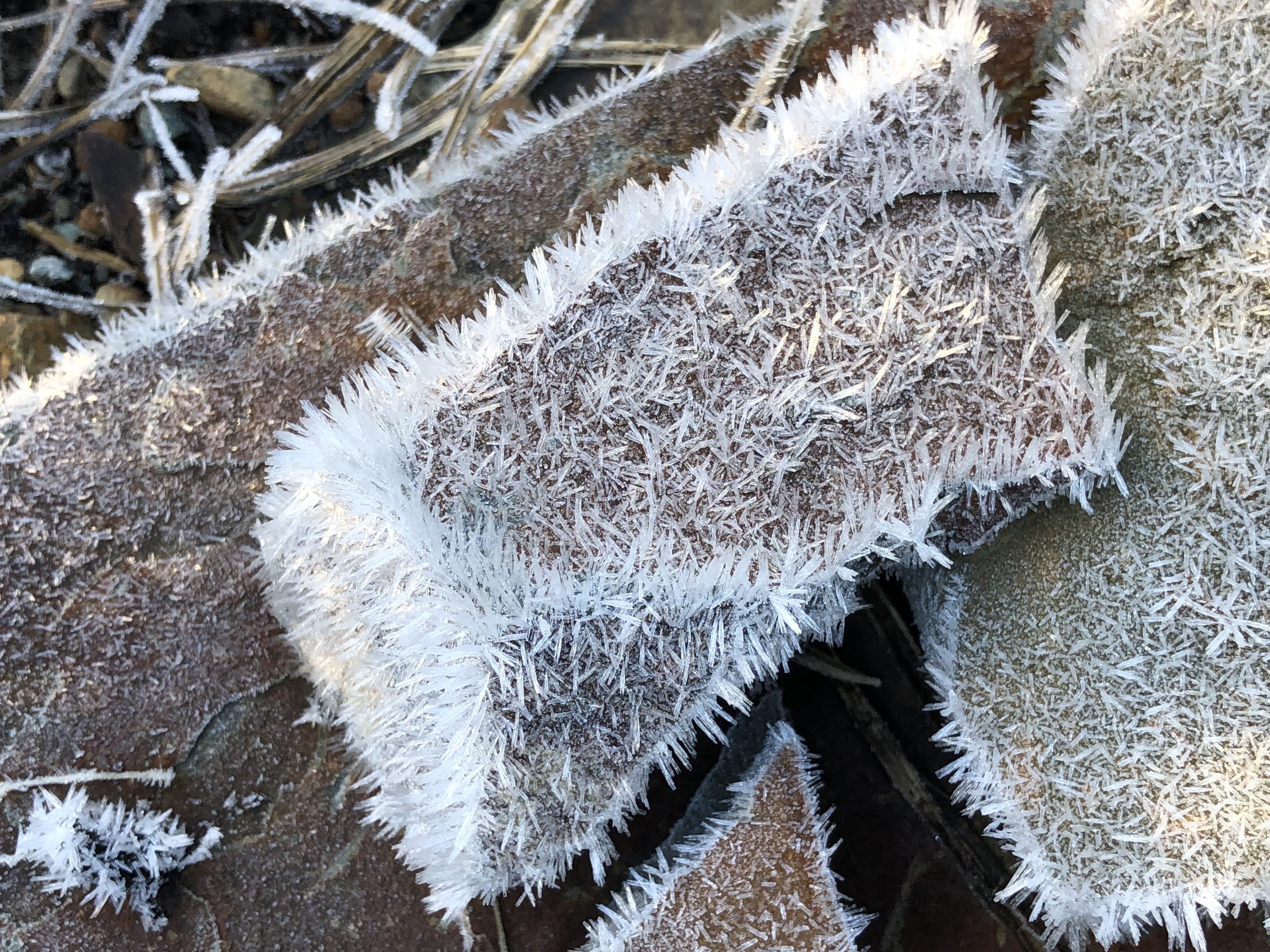
Frosty stone, with the angles of the stone defined by needle-like ice crystals.
Frosty stone: I think that because it was a smaller stone, slightly elevated from the wall, it became a good cold surface for growing frost.

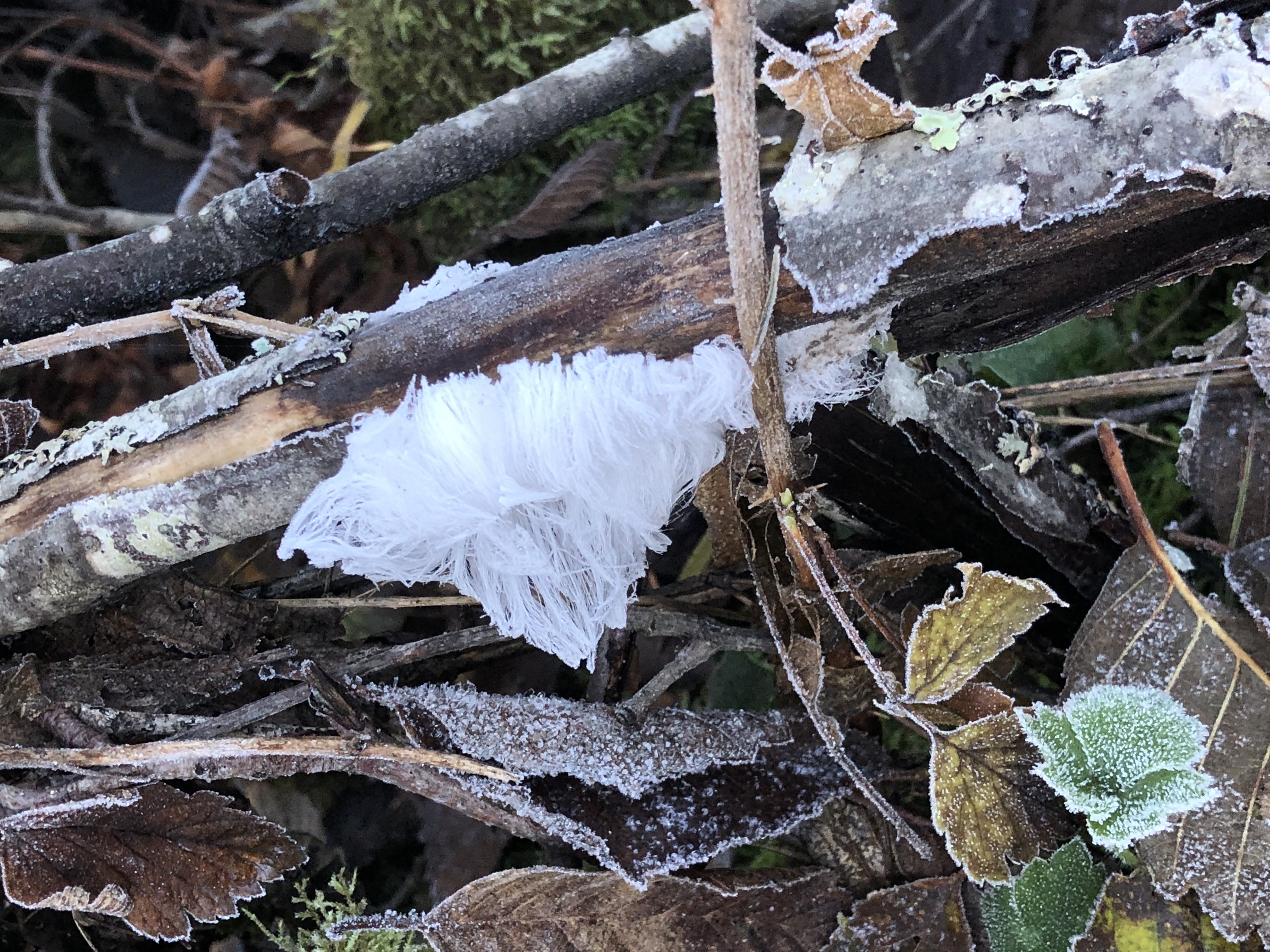
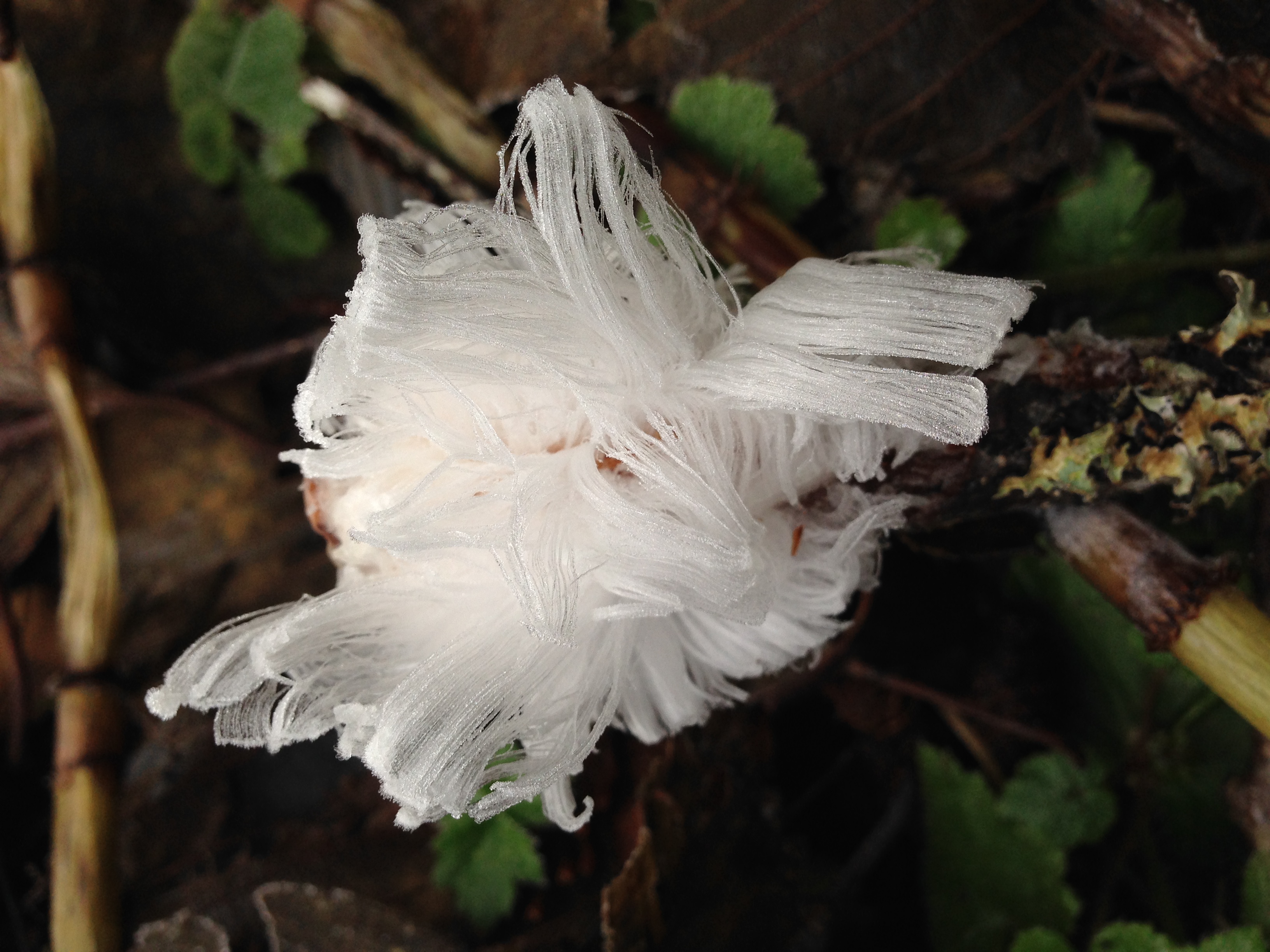
In addition to the lovely gallery of Jack Frost’s work in the garden, there was a special treat close to the road: a frost flower. These are formed of fine tendrils of ice extruded from dead/rotten sticks when conditions are just right. It requires the perfect combination of temperature, moisture content, and pores in the wood.

This isn’t an especially spectacular example in terms of form, but the hair-like crystals were close to an inch long.

Frost flower
Frost flower

Frost flowers can be very beautiful. This is one we saw near the Elwha River almost four years ago. It was one of more than a dozen frost flowers we saw at that location, and the most picturesque. It was the first time we had ever seen them, and the conditions at the old campsite must have been perfect to have so many in one spot.

Symmetrical frost flower (actually looks flower-like)
Frost flower taken 1/3/2015 near the Elwha River

Out and About

This weekend was a bit of a bustle.

I had a friend’s holiday open house on Saturday — in Black Diamond, almost three hours away! — so I combined that with a work visit to SeaTac and a visit to Mom and Dad.

Living out here has required some adjustments. To avoid missing out, I have to commit to doing things in spite of the drive; to avoid killing myself, I have to be sensible about minimizing trips.

It worked out well. I had a nice little visit with Mom and Dad, including a nice walk down to Titlow Park before heading to the open house on Saturday.

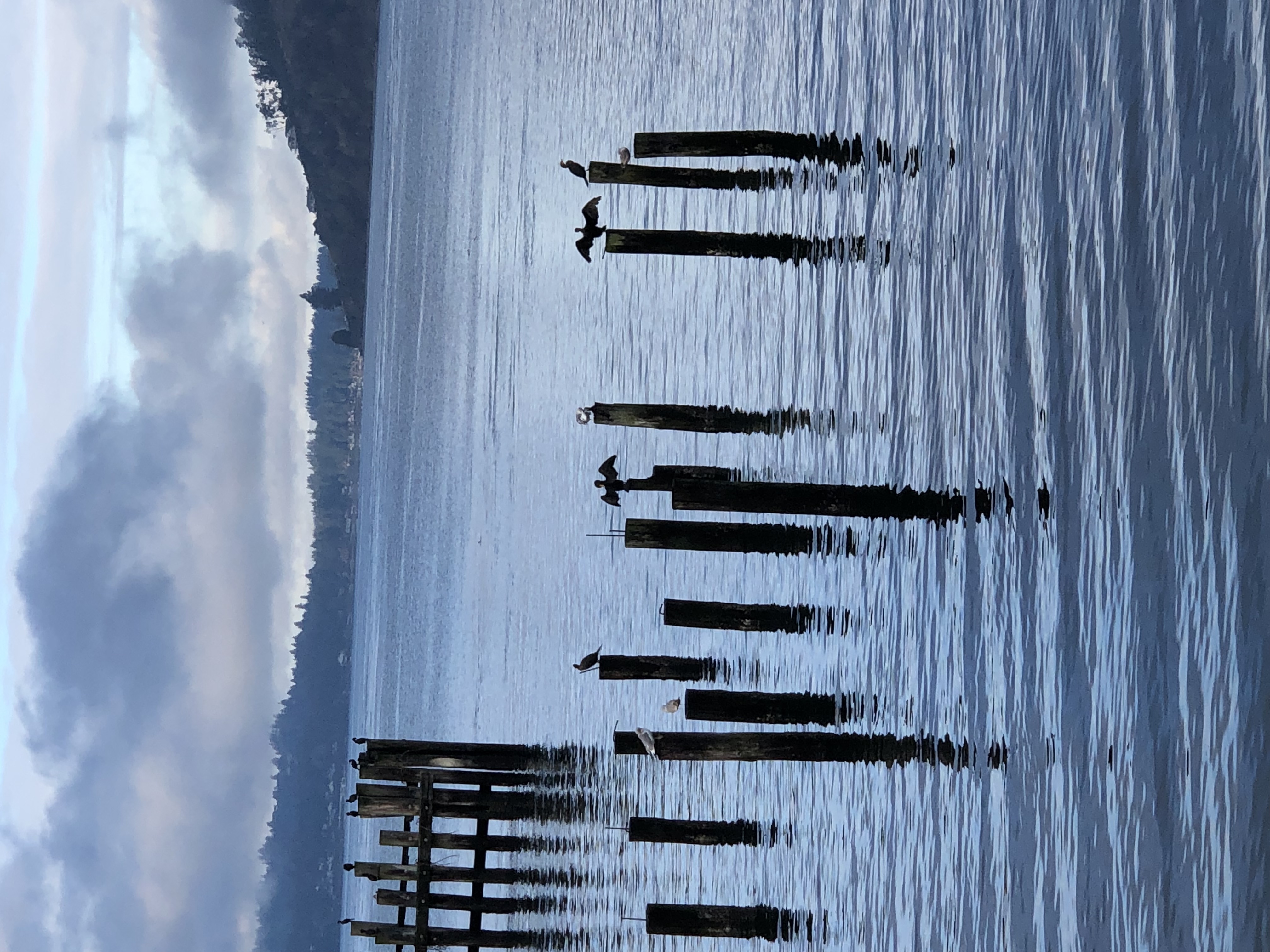
Cormorants at Titlow Beach

Here, cormorants hang out their wings to dry. Unlike most shore birds, they don’t have oil to keep their feathers dry.